
If you’ve never had a massage therapist walk on your back, it’s hard to picture what makes ashiatsu massage so different from anything else on a spa menu. But once you understand the mechanics behind it, the appeal makes a lot more sense. Ashiatsu massage is a barefoot bodywork technique in which a trained therapist uses their feet, body weight, and gravity — instead of hands, elbows, or forearms — to deliver broad, deep, gliding pressure through the muscle tissue. For Portland clients dealing with chronic tension, stubborn knots, or pain that regular massage never quite reaches, it’s often described as the most therapeutic option available.
At Inner Escape Bodywork, ashiatsu is one of our signature offerings, and it’s also one of the most misunderstood. So let’s break down what it actually is, where it came from, what a session looks like, and whether the results hold up.
Ashiatsu massage — sometimes searched as “ashiatsu massage near me” or simply “ashiatsu” — combines two Japanese words: ashi, meaning foot, and atsu, meaning pressure. In practice, that translates to a massage therapist using their bare feet to apply long, flowing strokes and slow compressions across your back, legs, and shoulders while holding onto specially mounted overhead bars for balance and control.
This isn’t a therapist casually stepping on your back. It’s a controlled, precise technique that allows for:
Because of that combination, ashiatsu is often referred to as “barefoot massage,” “back walking massage,” or “walk on back massage” — all names for the same underlying technique.
Ashiatsu isn’t a modern spa trend. Barefoot bodywork has roots that stretch back more than 3,000 years across several cultures, including:
The modern, Western version of ashiatsu that most U.S. practices offer today — performed on a massage table with oil, ceiling-mounted bars, and structured technique — was formalized in the mid-to-late 1990s by massage therapist Ruthie Hardee, who trademarked the method as Ashiatsu Oriental Bar Therapy. Her approach blended the deep, broad pressure of Eastern barefoot traditions with Western anatomy and Swedish massage principles, including the use of lubricant and long strokes rather than the drier, clothed techniques used historically.
In the decades since, thousands of massage therapists across the country have trained in ashiatsu, and it’s grown from a niche offering into one of the most requested deep-pressure modalities in the industry — including here in Portland.
A typical ashiatsu session runs about 60 to 90 minutes, similar to a standard deep tissue appointment. Here’s what generally happens:
The overhead bars are the detail that surprises most first-time clients, but they serve a practical purpose: they let the therapist distribute their weight with precision instead of simply standing on the client, which is what makes the technique both deep and controlled at the same time.
This is one of the most common questions we hear, and it makes sense — both are marketed as solutions for chronic tension and stubborn muscle pain. The difference comes down to tools and pressure distribution.
Traditional deep tissue massage relies on a therapist’s hands, knuckles, forearms, and elbows to reach deeper muscle layers. It’s effective, but it’s also limited by how much force a therapist can generate and sustain with their upper body before fatigue sets in. Ashiatsu removes that ceiling. A therapist standing upright, using their body weight and leg strength through the bars, can apply and sustain a level of broad, even pressure that’s difficult to replicate by hand — which is why many clients who feel like standard massage “never goes deep enough” gravitate toward ashiatsu instead.
Ashiatsu isn’t just a novelty — the demand behind it reflects a broader shift in how people think about massage therapy generally. According to the American Massage Therapy Association’s most recent consumer research:
Within that context, ashiatsu’s specific benefits tend to include:
For anyone who has tried standard massage without lasting results, that combination is usually the answer to “is ashiatsu massage worth it.”
Ashiatsu has a strong safety record when it’s performed by a trained, licensed therapist — which is the key qualifier. The technique requires specific certification beyond standard massage licensure, precisely because it involves body-weight pressure and balance tools that aren’t part of typical training.
A few things worth knowing before you book:
Does ashiatsu massage work? For the vast majority of clients dealing with chronic tightness, postural strain, or pain that hasn’t responded to lighter massage, the answer is yes — and it’s a big part of why the technique has held onto its popularity for nearly three decades.
If you’ve searched “ashiatsu massage Portland” or “ashiatsu near me” and landed here, here’s the short version: this isn’t a service every spa or massage chain offers, largely because of the additional certification it requires. At Inner Escape Bodywork, ashiatsu is one of our core specialties — not an add-on menu item — which means it’s performed with the depth of training the technique was actually designed around.
Our Portland studio, located on SE Belmont, was built specifically around therapeutic bodywork rather than quick spa-style treatments. If you’re curious whether ashiatsu is the right fit for your body and your goals, the best next step is simply booking a session and feeling the difference for yourself.
Ready to experience Portland’s deepest, most therapeutic massage technique? Book your ashiatsu session today and find out what three thousand years of refinement feels like.
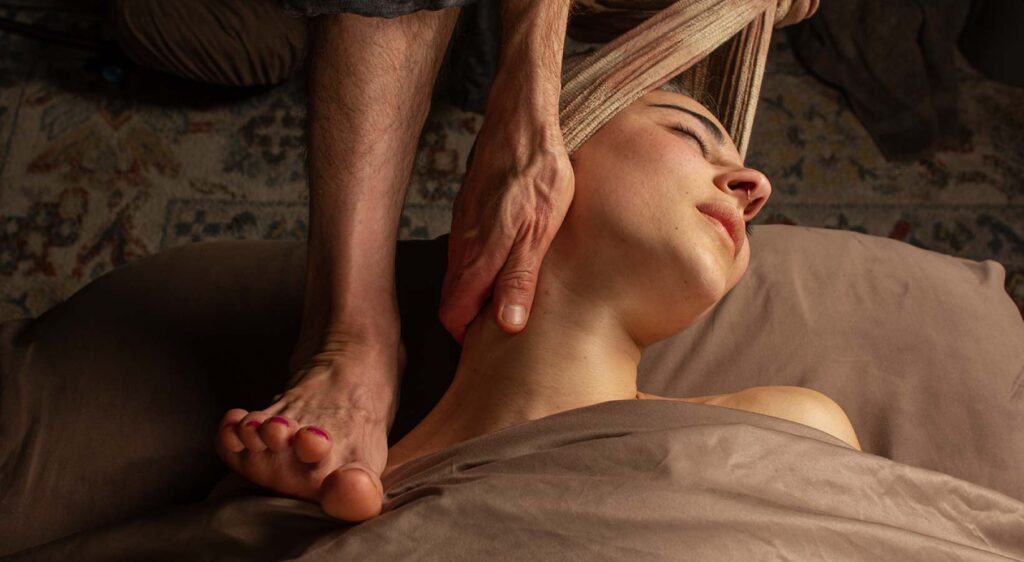
Ashiatsu massage is a barefoot bodywork technique in which a trained therapist uses their feet, body weight, and gravity — supported by overhead bars for balance — to deliver broad, deep pressure across the muscles. It’s often described as more thorough than traditional hands-on massage because of how evenly and consistently that pressure is applied.
Yes, when it’s performed by a therapist certified specifically in ashiatsu. The overhead bars give the therapist full control over depth and balance, so pressure is applied deliberately rather than through uncontrolled body weight. As with any massage, disclose your health history beforehand, since ashiatsu isn’t recommended for certain conditions like recent surgeries, acute injuries, or some pregnancies.
For most people dealing with chronic tightness, postural strain, or pain that hasn’t responded to lighter massage, yes. It’s especially popular with athletes and anyone who needs a level of depth that’s difficult to achieve with hands alone, though it’s just as good a fit for clients who simply want a deeply relaxing, full-body reset.
Yes — the broad, sustained pressure allows adhesions and tight fascia to release more fully than shorter, hand-based strokes typically allow, and many clients report longer-lasting relief between sessions. That track record is a big part of why ashiatsu has stayed a requested modality for nearly three decades instead of fading as a novelty.
Nothing — like a standard deep tissue or Swedish massage, ashiatsu is performed with oil directly on the skin, and you’ll be professionally draped throughout except for the area being worked on. Draping is slightly more full-coverage than in a typical massage since the therapist needs consistent skin contact with the feet, but your comfort and modesty are maintained the entire session.